Built or Bought?
Technical tradeoffs between DIY and commercial 3D printers
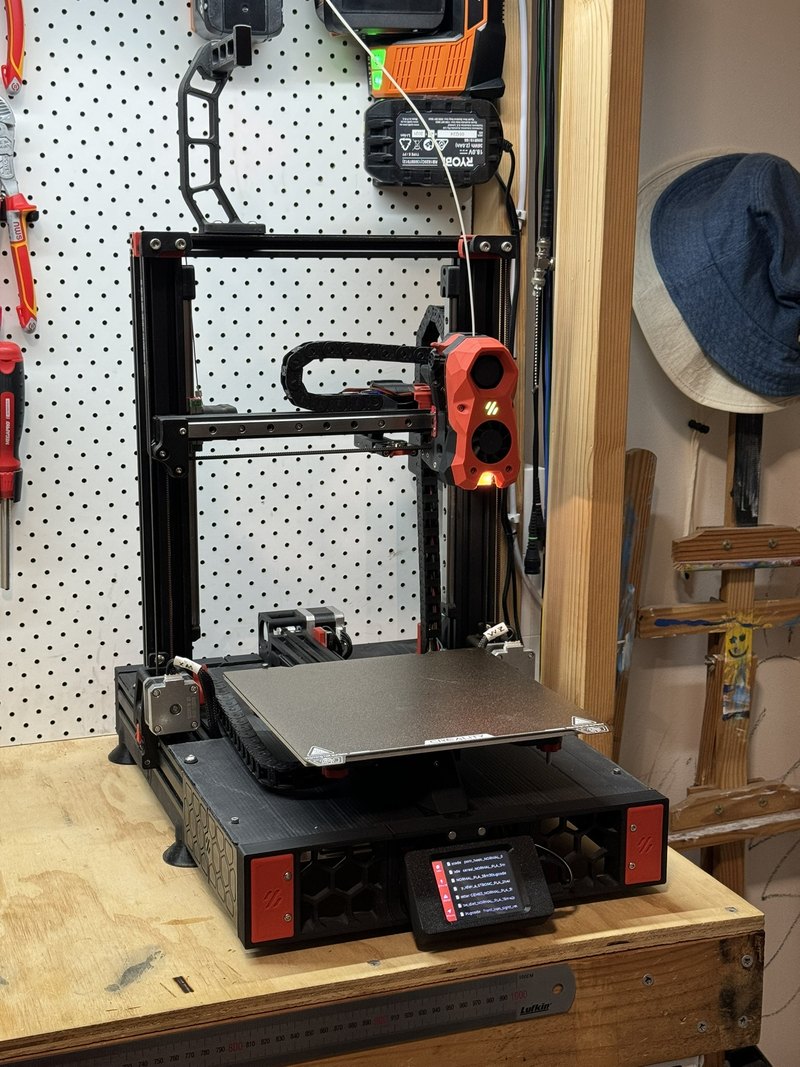
TL;DR: If the priority is time-to-part, consistency, and support, buy a ready printer. If the priority is learning, customisation, and repairability, and you can invest the time, build. The right answer is the one that ships your parts reliably within your own constraints of budget, time, and tolerance.
Why this question keeps coming up
Before the i3 boom and the “appliance-like” generation of machines, many makers built printers from kits or plans. Projects like RepRap made home-built printers accessible. Later, companies like Prusa, Creality and Ultimaker brought 3D printing to the masses with ready-to-use machines. Enthusiast communities such as VORON, VzBot, and ZeroG pushed CoreXY design so far that a well-built DIY printer can rival many retail models, if you build and tune it properly.
DIY vs Commercial: quick comparison
| Factor | DIY / Kit | Commercial / Ready-to-run |
|---|---|---|
| Up-front cost | Lower for hardware; tools/extras add up | Higher, but bundled and supported |
| Time investment | High (build, tune, maintain) | Low (setup and profiles included) |
| Learning & control | Maximum | Limited; trade control for convenience |
| Reliability | As good as your build quality | Predictable and repeatable |
| Speed to first part | Slow (days-weeks) | Fast (hours) |
| Support | Community-driven | Vendor support and warranty |
| Expandability | Excellent; open ecosystem | Limited to vendor options |
| Total cost of ownership | Cheap parts, but high time cost | Higher buy-in, lower upkeep time |
When building makes sense
- You enjoy the process and want full control; firmware, kinematics, materials, mods.
- Your parts demand features only possible through customisation, such as enclosure, toolheads, or high-temp paths.
- You are happy to spend weekends assembling, calibrating and troubleshooting.
When buying makes sense
- You need parts now and value your time more than the cost difference.
- You want consistent, reliable production for client work.
- You prefer tuned defaults such as bed levelling, reliable first layer, and vendor support.
Hidden costs people forget
- Time: build (10-30 h), tuning, maintenance, failed prints.
- Tools & spares: servos/motors, electronics, belts, nozzles, fasteners.
- Environment: enclosure, ventilation.
- Profiles: slicer tuning for each material/nozzle combo.
So which should you pick?
Choose the route that reliably produces usable parts on your timeline. If you need repeatable output quickly, buy. If you need control, repairability, and learning value, and can afford the build time, DIY.
What I run & how I help
At Ryan Dynamics, I run enclosed printers tuned for engineering materials (ASA, ABS, PC) and help clients who:
- need functional parts with predictable tolerances,
- want design-for-print guidance, or
- have a DIY printer and need help calibrating or profiling.
Need practical parts?
Common questions
Is a DIY printer always cheaper?
Often on hardware, not on time. If your time is valuable, a commercial printer can be cheaper overall.
Which is more reliable?
A well-built DIY can be rock solid, but a commercial printer reaches predictable results faster.
Can I start with a commercial printer and mod later?
Yes, many people do. Start producing, then mod within the vendor ecosystem as you grow.