Filament Dry Box
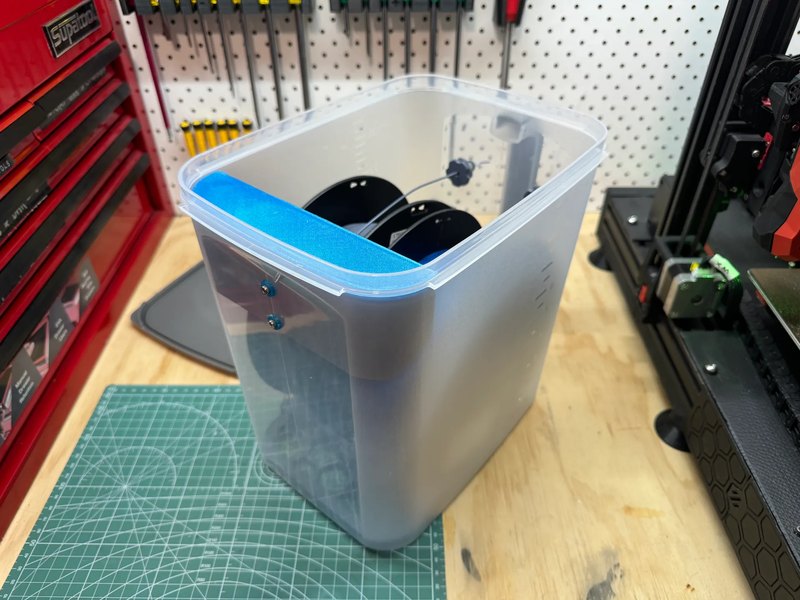
Dual-spool filament dry box using a locally available K-Mart container
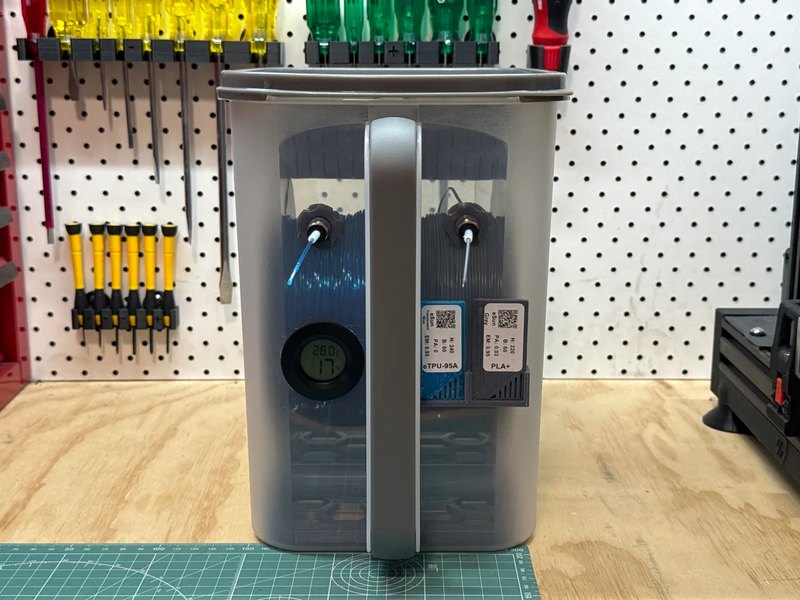
TL;DR: A dual-spool dry box was designed around a locally available K-Mart 9 L container. Key goals were low cost, common hardware, fast spool changes, and effective moisture control. Iterations from V1 to V3.1 improved printability, capacity, and hygrometer mounting.
Problem
Many dry box designs use containers that are hard to source in Australia or uneconomical to import. Many also use a through-spool rod, which slows spool changes and handling. The requirement was an off-the-shelf local container, standard hardware, sealed filament feed, and fast spool access.
Constraints & goals
- Availability: container must be purchasable locally (K-Mart 9 L Dry-Food Container).
- Cost: common hardware only (608 bearings, PC4-M10 couplers), minimal printed mass.
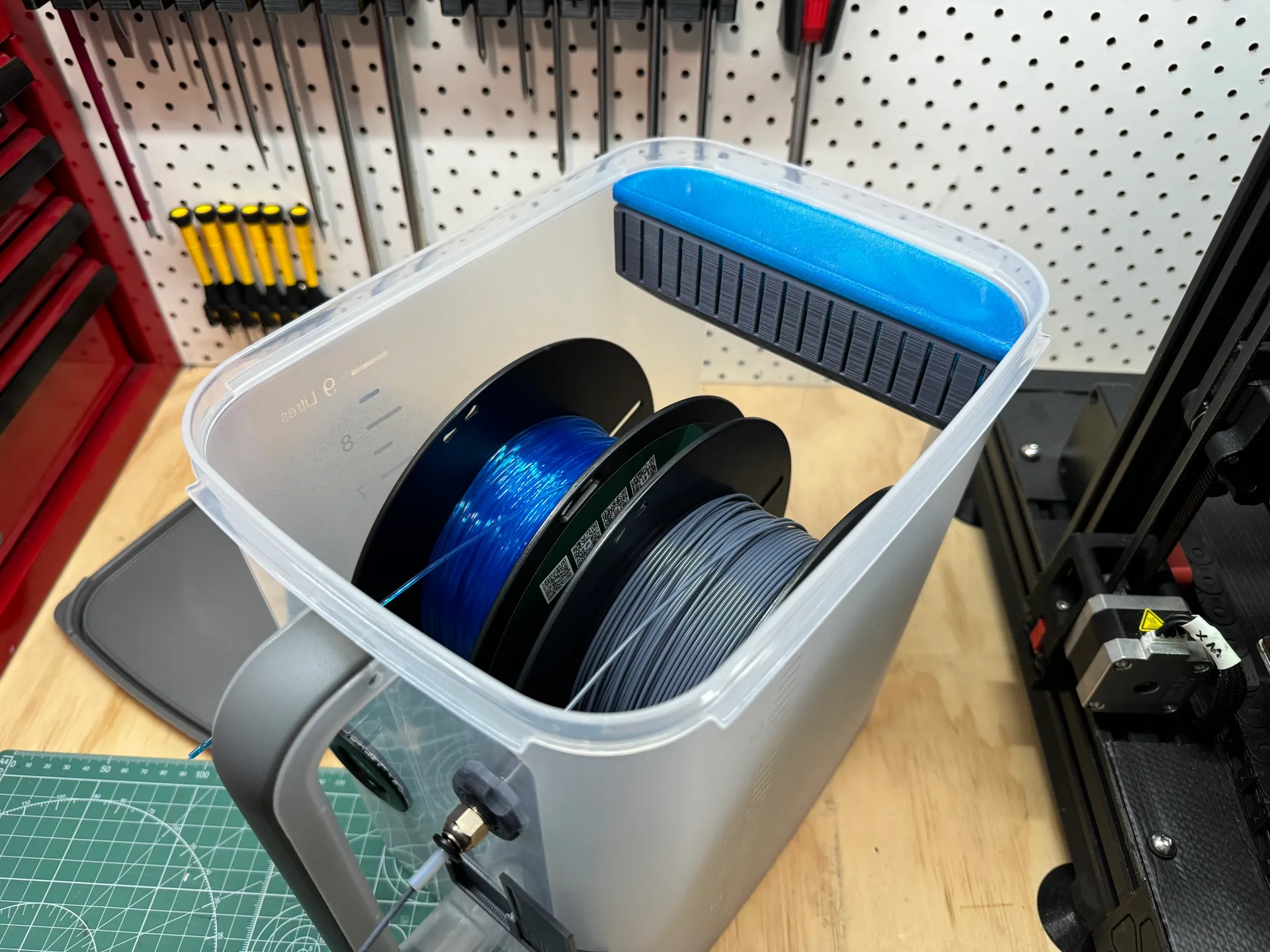
- Usability: no central rod; spools roll on bearings, quick in/out access, feed through couplers.
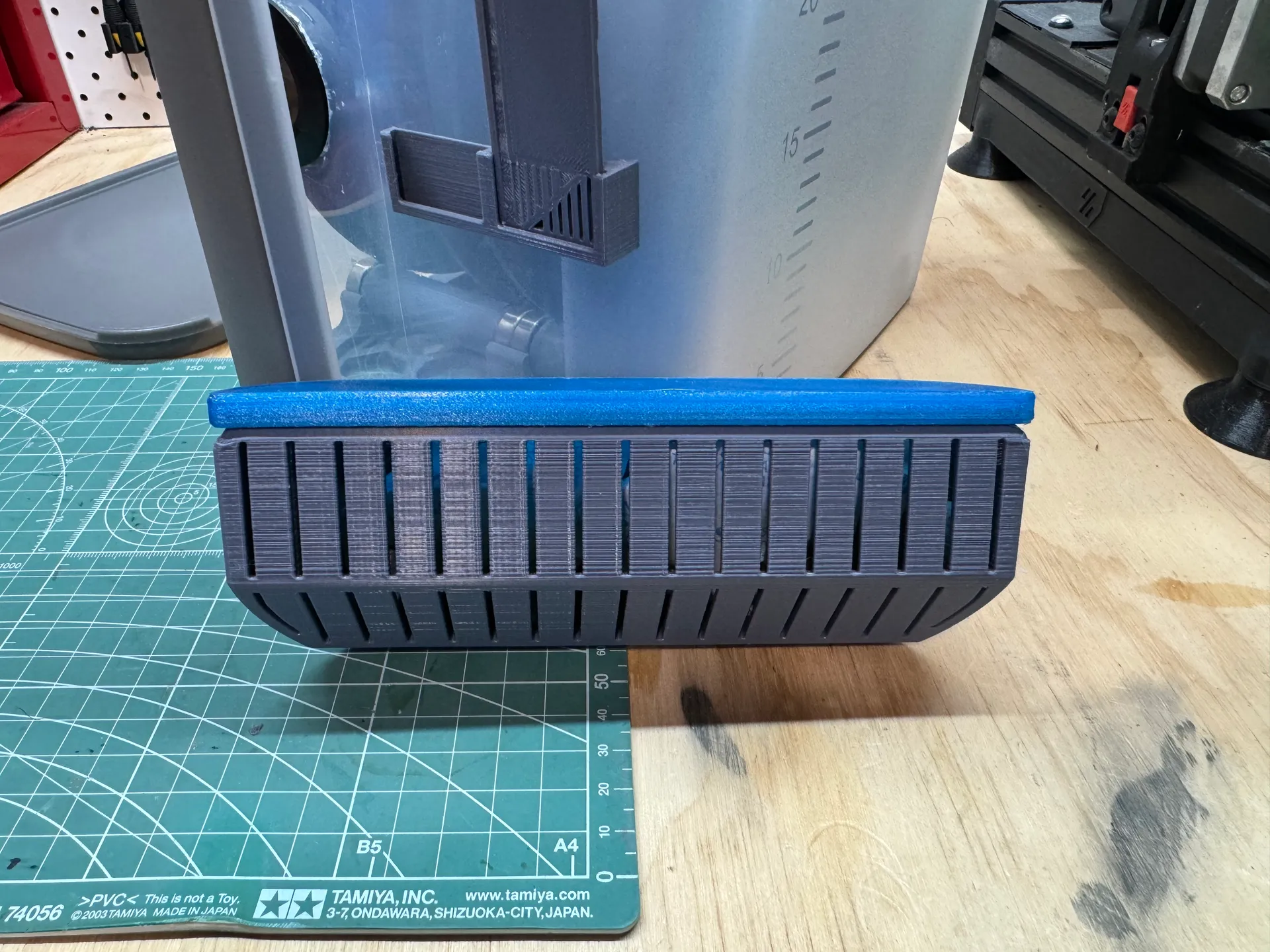
- Serviceability: desiccant tub removable and oven/microwave-dryable (PETG body + TPU lid).
- Capacity: dual 1 kg spools, wider spools supported in later revisions.
- Printability: sensible orientations, reduced waste, no exotic supports.
Solution overview
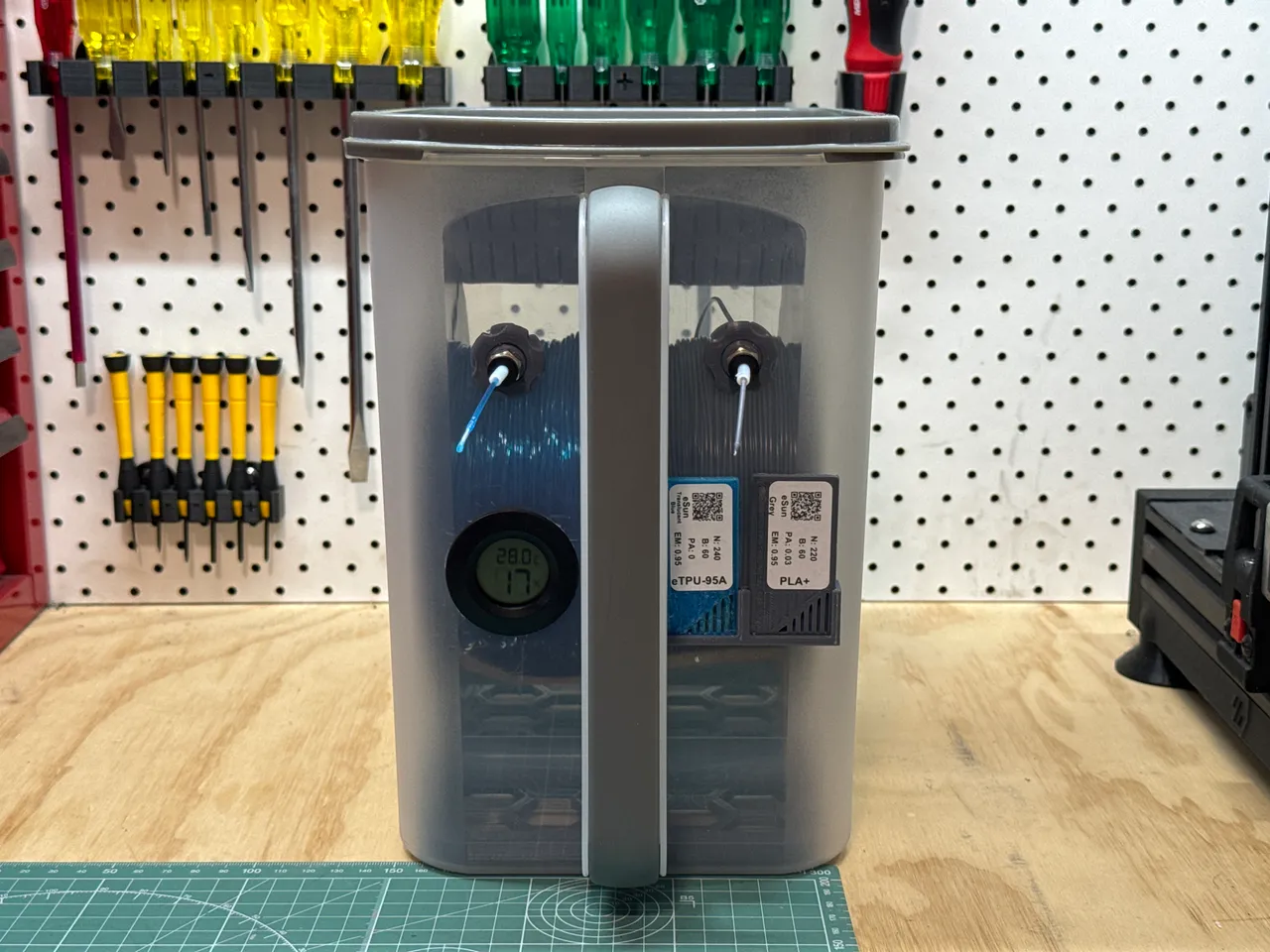
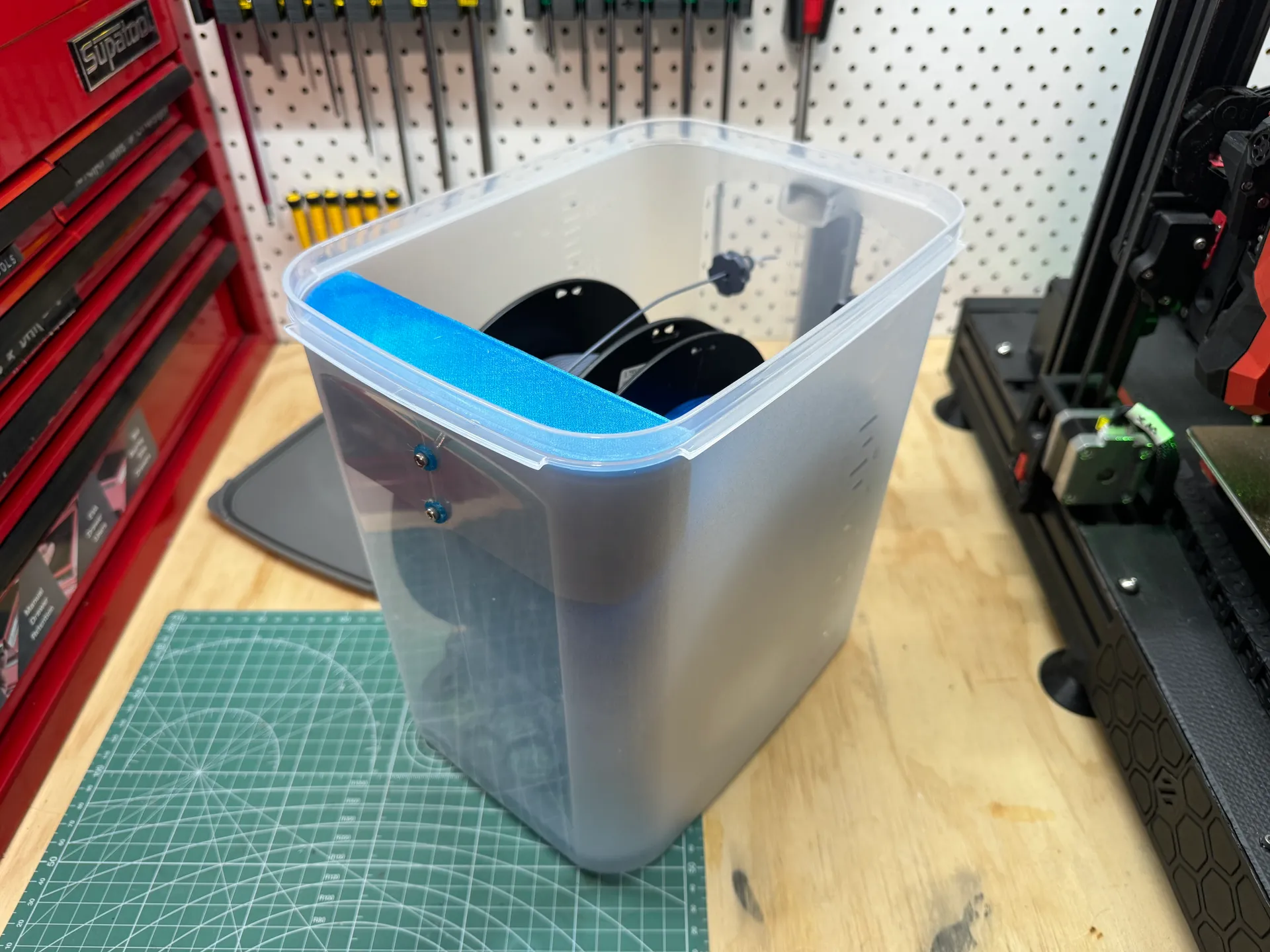
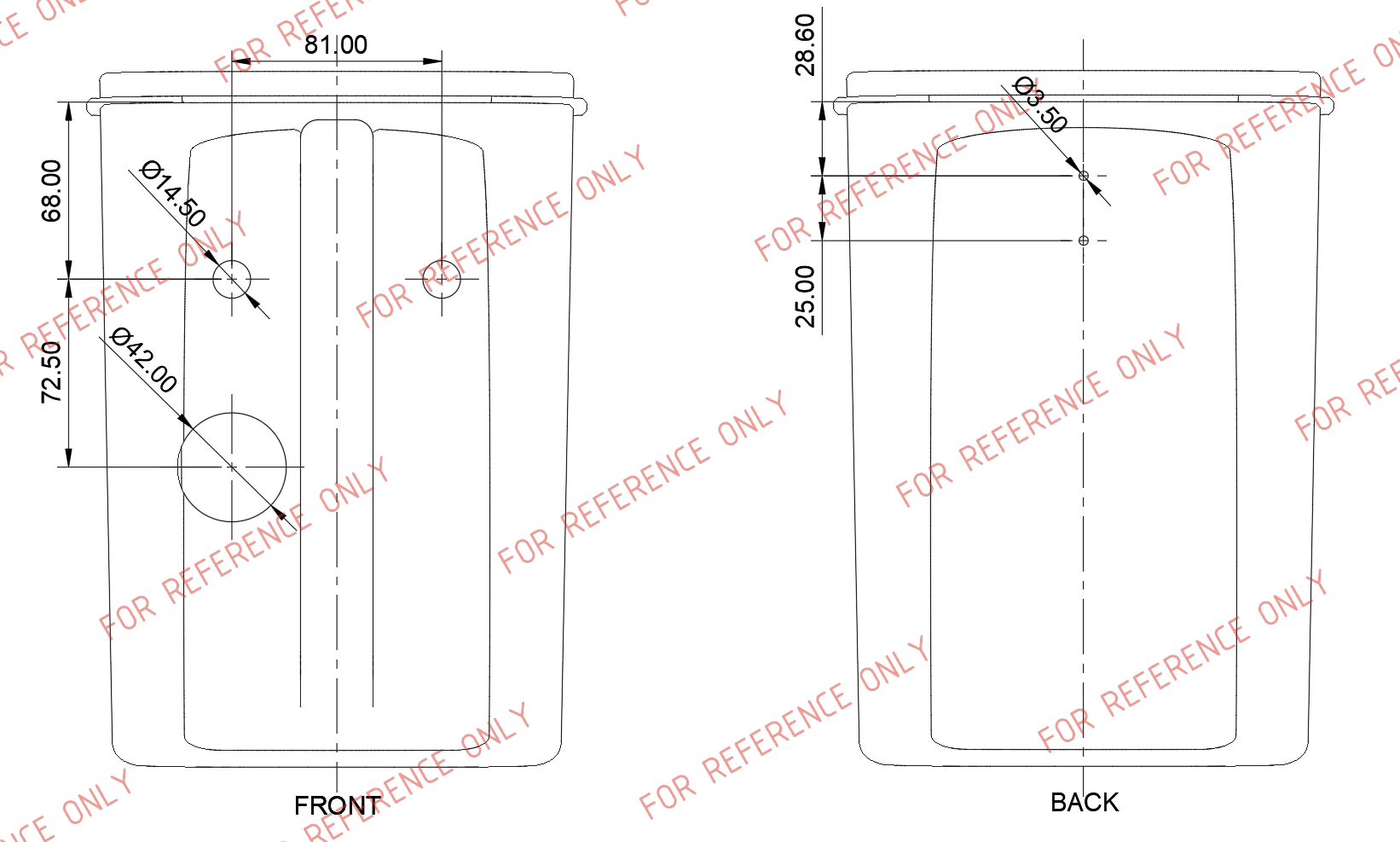
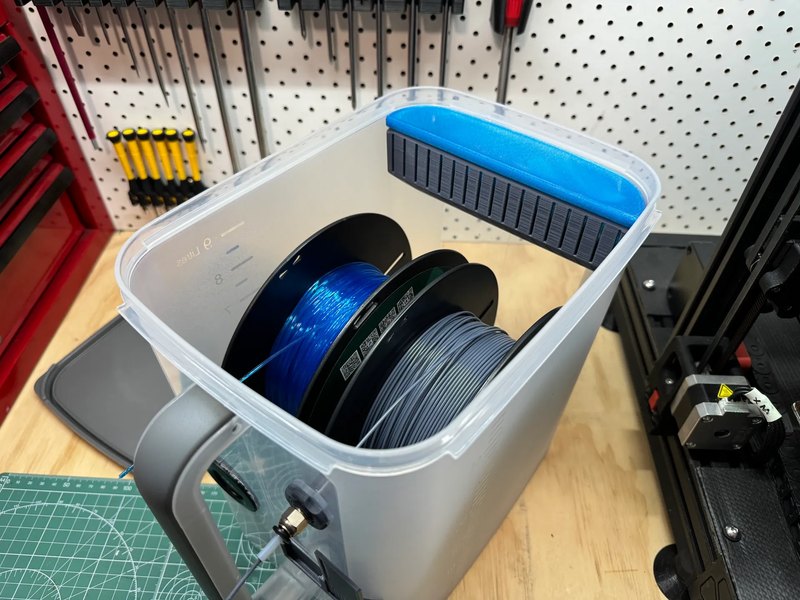
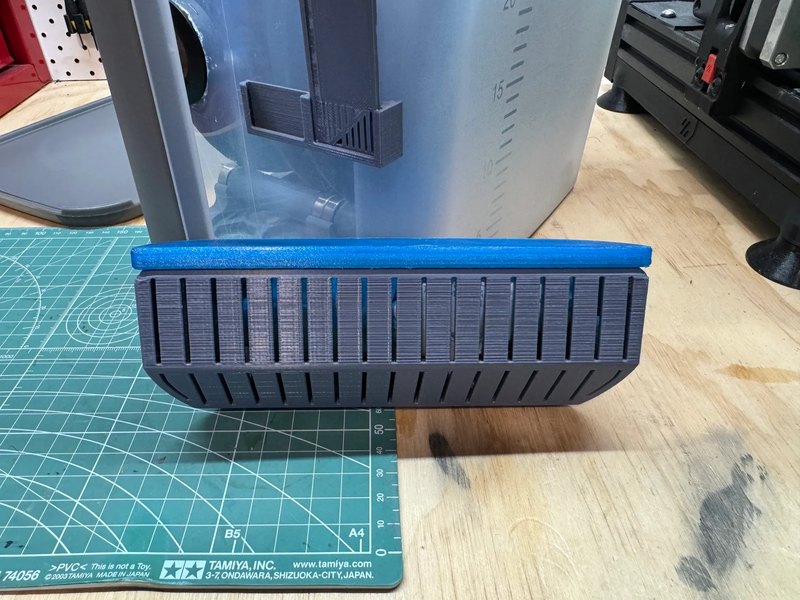
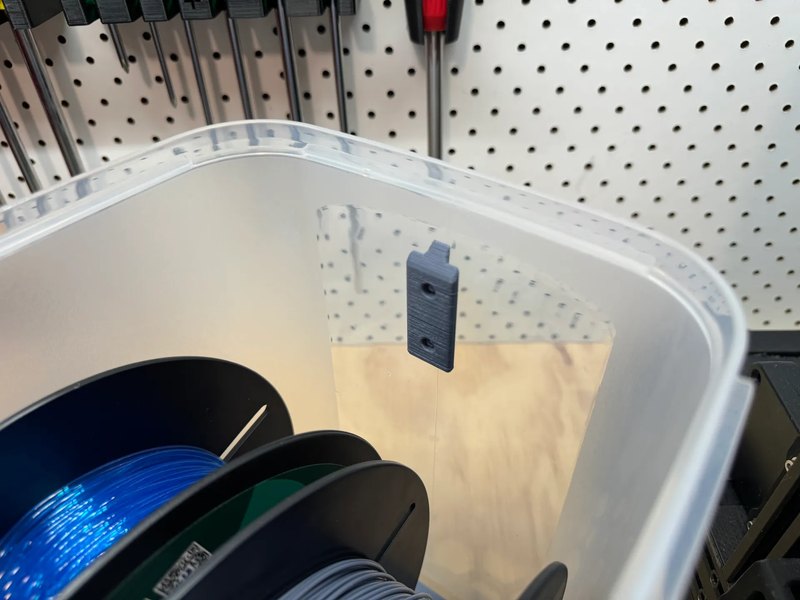
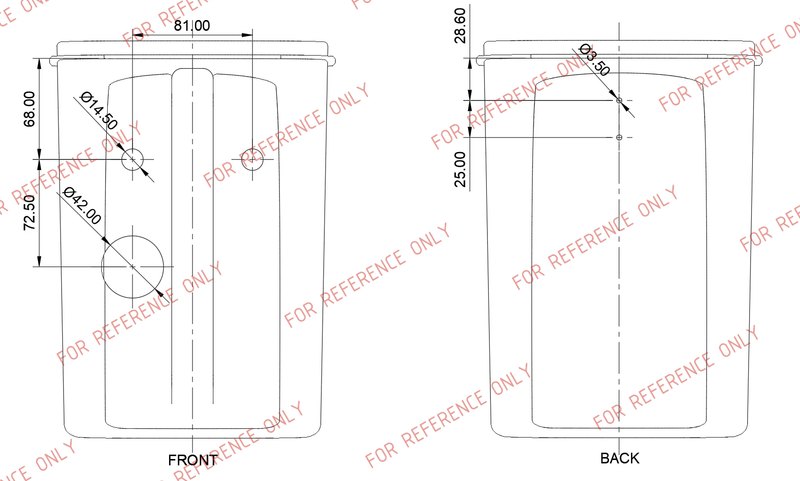
The box uses side rollers with 608 bearings so spools sit and spin freely. Two PC4-M10 couplers route PTFE out the front for clean filament feed. A PETG desiccant tub with a TPU snap lid slides onto a mounting rail for quick removal and re-drying. A compact hygrometer mount gives visibility without cutting the container (V3+).
| Design element | Rationale | Material |
|---|---|---|
| Side roller brackets + 608 bearings | Fast spool swaps; smooth feed; no rod alignment | PLA+/PETG (brackets), steel (608) |
| PC4-M10 couplers | Standard PTFE interfaces; easy to source | Brass/stainless |
| Desiccant tub + slide-in rail | Quick removal for re-dry; no warping when heated | PETG (tub), TPU (lid) |
| Hygrometer mount (no cut) | Container remains intact; easier build | PLA+ |
Changelog
- V1 - 2023-11-23: Initial release.
- V2 - 2024-05-21: Redesigned base plates to reduce filament waste and increase printability; reduced roller diameter.
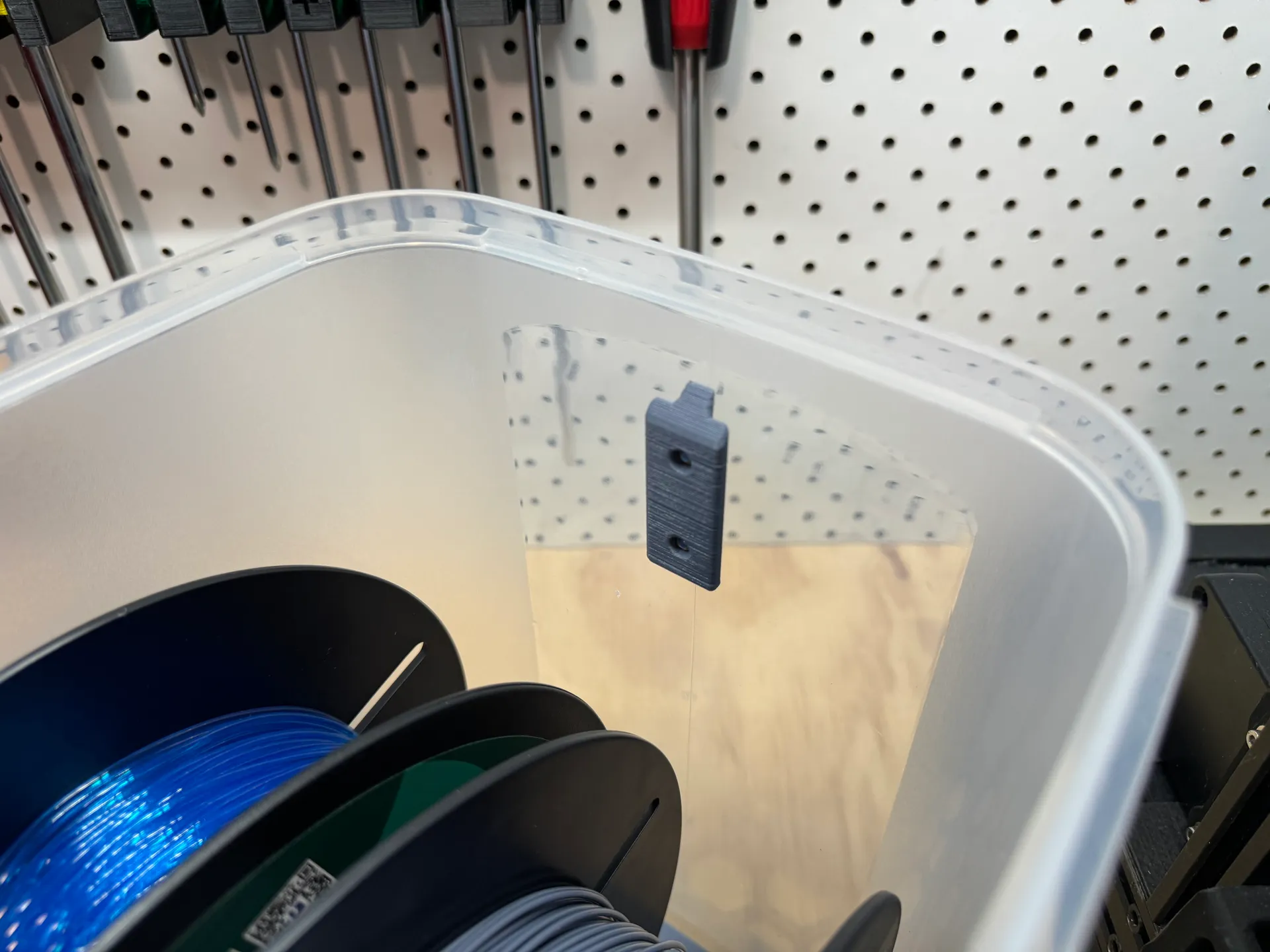
- V3 - 2025-07-08: Increased max allowable spool width to 67 mm; improved hygrometer mount, removing the need to cut the tub.
- V3.1 - 2025-07-26: Added thread-forming holes to MOUNT; new clip-on swatch.
Bill of materials
- K-Mart 9 L Dry-Food Container (AU, link below)
- 4 x 608 bearings (rollers)
- 2 x PC4-M10 PTFE couplers
- Silica gel desiccant (loose or sachets)
- Optional: round hygrometer
- Printed parts: brackets, base plates, desiccant tub (PETG), lid (TPU), and mounts
Printing & assembly notes
- Materials: PETG for parts near heat; TPU for the desiccant lid; PLA is fine for base plates, spindles, and mounts.
- Orientation: base plates printed to take load across layers; desiccant tub upright; no supports required.
- Perimeters & infill: 3 perimeters, 20-30% infill works well.
- Tolerances: press-fit for 608s; thread-forming holes (V3.1) remove the need for threaded inserts.
Results
With fresh desiccant, humidity drops rapidly and remains low during normal use. The roller layout makes swaps trivial, and the front PTFE couplers keep feeds tidy. The V3+ changes mean the tub stays intact. No drilling, so anyone can build this with basic tools.
Images
Files & source
Apply this approach
This is the same design method I use on client work: define constraints, iterate toward buildability, validate against real-world use. If you want help selecting materials or designing around moisture and handling, start a project discussion below.
Need something similar?
Common questions
Why not a central rod?
It slows spool swaps and complicates handling. Side rollers are quicker and still feed smoothly.
What materials should I print the parts from?
PETG or ABS for the desiccant tub, TPU for the snap lid, and PLA/PLA+ is fine for everything else.
How often should I dry the desiccant?
It depends on use and ambient humidity; re-dry when the hygrometer trends upward or after a spool change in humid weather.
What relative humidity should I aim for inside the box?
Typically under 20-30% RH for hygroscopic filaments such as Nylon and PETG; for ABS, ASA, and PC, keep it below ambient and stable.
Do I need PTFE couplers?
Couplers keep the filament path sealed and tidy; you can opt to leave them out if you want to just use the box as a dry container.